What Sets Specialty Miami Veterinary Services Apart
What Sets Specialty Miami Veterinary Services Apart
When your pet faces a health challenge that goes beyond the scope of routine care, finding answers can feel overwhelming. Many Miami pet owners search for advanced options when their dog or cat needs more than a standard checkup. This is where specialty Miami veterinary services truly stand out. At The Veterinary Internal Medicine Group, located at 12968 Southwest 132nd Avenue, Miami, FL 33186, we provide expert diagnostic imaging, such as ultrasound, and in-depth internal medicine consults by a board-certified specialist. This miami veterinary services blog will help you understand how specialty care differs from general practice, why advanced diagnostics matter, and when your pet may benefit from seeing a veterinary specialist in Miami.
In the sections below, we explore the signs that indicate your dog or cat could need advanced care, walk through the causes of complex health problems, explain the role of specialty diagnostics, and offer guidance on what to expect from a specialty internal medicine consultation. Whether you live in Miami or in one of the surrounding communities, our veterinary team is committed to helping you get the answers your pet deserves.
Recognizing When Your Pet Needs Specialty Veterinary Care
One of the most common questions pet owners have is: How do I know when my pet needs specialty care? General practice veterinarians handle most routine health concerns, but there are times when a dog's or cat's condition requires a deeper level of investigation. Key signs your pet may need specialty diagnostics include ongoing vomiting or diarrhea that does not improve, chronic weight loss, persistent coughing, unexplained changes in urination or thirst, and recurring or unresponsive infections. Additionally, if your veterinarian finds abnormal bloodwork or x-rays and recommends further diagnostics, it may be time to seek a specialist.
Pets with complicated health issues—such as suspected organ dysfunction, unexplained fevers, or complex endocrine disorders—often benefit from the expertise of an internal medicine specialist. If your pet has been diagnosed with a condition like inflammatory bowel disease, immune-mediated disease, or certain types of cancer, your veterinarian may refer you for advanced imaging or further evaluation. Ultimately, if you find yourself searching for a miami veterinary services blog to understand what makes specialty care different, you are likely facing a situation where your pet could truly benefit from these expert services.
Understanding the Causes Behind Complex Pet Health Issues
Complex health problems in dogs and cats can arise from a wide range of causes. Some conditions, like chronic gastrointestinal disease, may have genetic or immune-mediated roots. Others, such as kidney or liver disease, can develop over time or may be triggered by infections, toxins, or age-related changes. Endocrine disorders, including diabetes, Cushing’s disease, or Addison’s disease, often require nuanced diagnostic work to pinpoint the underlying issue.
Many times, the signs of these diseases overlap with more common, mild illnesses. For example, a pet with intermittent vomiting could have anything from a simple stomach upset to a serious issue like pancreatitis or gastrointestinal lymphoma. When routine treatments and diagnostics do not provide answers, advanced imaging such as abdominal ultrasound by a board-certified specialist can be a critical next step. In some cases, minimally invasive procedures, such as ultrasound-guided fine needle aspirates, are needed to obtain samples for more precise diagnosis.
When you work with a veterinary internal medicine specialist, you gain access to a comprehensive approach that includes a detailed review of your pet’s history, targeted diagnostic testing, and the expertise to interpret complex findings. This is especially important for dogs and cats with unexplained or recurring symptoms, as well as for those with diseases that are rare or challenging to diagnose.
Advanced Diagnostics and What to Expect from Specialty Veterinary Services
Specialty veterinary services differ from general practice by offering access to advanced diagnostic tools and highly specialized knowledge. At The Veterinary Internal Medicine Group, our board-certified internal medicine specialist uses state-of-the-art equipment to provide accurate, minimally invasive diagnostics for dogs and cats.
Ultrasound and Advanced Imaging
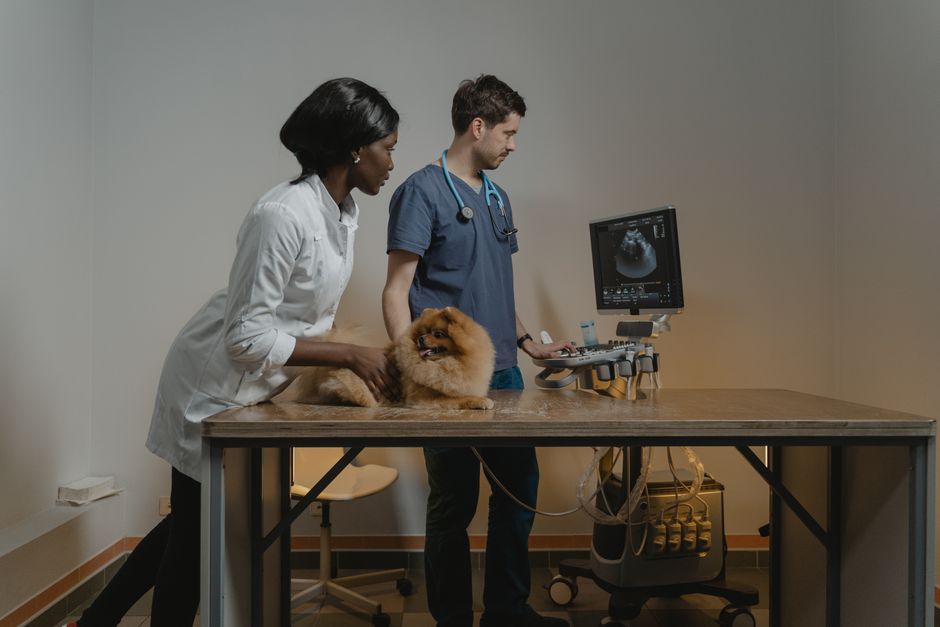
Ultrasound is a cornerstone of specialty diagnostics, allowing veterinarians to visualize internal organs in real time. This technique can provide crucial information about the liver, spleen, kidneys, pancreas, and gastrointestinal tract, as well as help identify masses, fluid buildup, or structural abnormalities. In more complex cases, advanced options like CT and fluoroscopy are available via our collaboration with MPI, enabling even deeper insights when standard imaging falls short. You can read more about advanced veterinary imaging options, including CT and fluoroscopy, and how these tools help provide answers for difficult cases.
Thoracic (chest) ultrasounds, particularly for non-cardiac issues such as chronic cough, persistent respiratory symptoms, or suspected cancer, are another valuable service provided by our specialty team. These focused diagnostics are especially important when standard x-rays reveal ambiguous findings or when more detail is needed to guide treatment. More on this can be found at our page on thoracic ultrasounds for non-cardiac evaluation in small-animal patients.
Internal Medicine Consults
An internal medicine consult involves a thorough evaluation of your pet’s medical history, clinical signs, and diagnostic results. Our board-certified specialist works in partnership with your family veterinarian, reviewing prior test results and developing a personalized diagnostic and treatment plan. This collaborative approach ensures that no detail is overlooked and that your pet receives the most targeted care possible. If you are considering an internal medicine consult, our internal medicine consultations page provides an overview of what to expect.
Minimally Invasive Procedures
In some cases, specialty diagnostics involve procedures such as abdominocentesis (removal of abdominal fluid), thoracocentesis (removal of chest fluid), or pericardiocentesis (removal of fluid around the heart). These procedures are performed with advanced imaging guidance to ensure safety and accuracy, minimizing discomfort for your pet while providing valuable samples for diagnostic analysis.
What Pet Owners Can Do at Home
While specialty diagnostics require professional expertise and equipment, there are important steps you can take at home to support your pet’s health and help your veterinary team. Keeping detailed records of your pet’s symptoms, such as the frequency and duration of vomiting, appetite changes, or bathroom habits, is invaluable. Sharing videos of concerning episodes or photographs of changes in your pet’s appearance can also provide helpful clues.
Maintaining a consistent feeding routine, administering prescribed medications as directed, and following recommendations for follow-up care are essential. If your pet has been referred for a specialty evaluation, gathering all relevant medical records and test results ahead of your appointment will streamline the process and ensure the best possible care.
At home, watch for any sudden changes in your pet’s behavior, appetite, or energy level, and communicate these to your veterinary team. Early intervention often results in better outcomes, so do not hesitate to reach out if you are concerned.
When to Seek Specialty Veterinary Care
Knowing when to involve a specialist can make a profound difference for your pet. If your general practice veterinarian has performed initial tests but cannot determine the cause of your pet’s illness, or if your pet’s condition is not improving despite treatment, it is time to consider specialty care. Additionally, if your veterinarian recommends advanced imaging, such as ultrasound or CT scans, seeking a board-certified specialist ensures the highest level of diagnostic accuracy.
Some situations require urgent specialty attention, including sudden collapse, severe breathing difficulty, or rapid-onset swelling of the abdomen. These cases may require immediate stabilization by an emergency clinic before referral to an internal medicine specialist for further diagnostics and ongoing care.
For many Miami pet owners, searching for a "specialty vet near me" is the first step toward finding the right help. Our team is here to guide you through the referral process and to provide the answers you need when routine care is not enough. We encourage you to discuss with your family veterinarian whether a specialty consultation at The Veterinary Internal Medicine Group is right for your pet.
Specialty Miami Veterinary Services: Your Partner in Complex Pet Care
Specialty veterinary care offers unique advantages for pets with challenging or unexplained health problems. From advanced imaging and minimally invasive procedures to comprehensive internal medicine consults, our board-certified veterinary team in Miami is dedicated to helping you find clarity and peace of mind. The miami veterinary services blog provides essential information to help you decide when specialty care could benefit your dog or cat, but nothing replaces the value of a one-on-one consult with a specialist.
If you are searching for a specialty vet near me or want to learn more about how advanced diagnostics can help your pet, reach out to The Veterinary Internal Medicine Group. Our veterinarians serve Miami and surrounding communities with compassion, expertise, and a commitment to answering your most difficult pet health questions. For more information about our services or to schedule a consultation, visit us at 12968 Southwest 132nd Avenue, Miami, FL 33186, explore our internal medicine consultations, or call us at (305) 677-2015. Your pet’s health and comfort are always our top priority, and our veterinary professionals are here to support you every step of the way.
This blog is intended for educational purposes only and should not replace professional veterinary care. Always consult your veterinarian regarding any concerns about your pet’s health or before making decisions about diagnostics or treatments.